
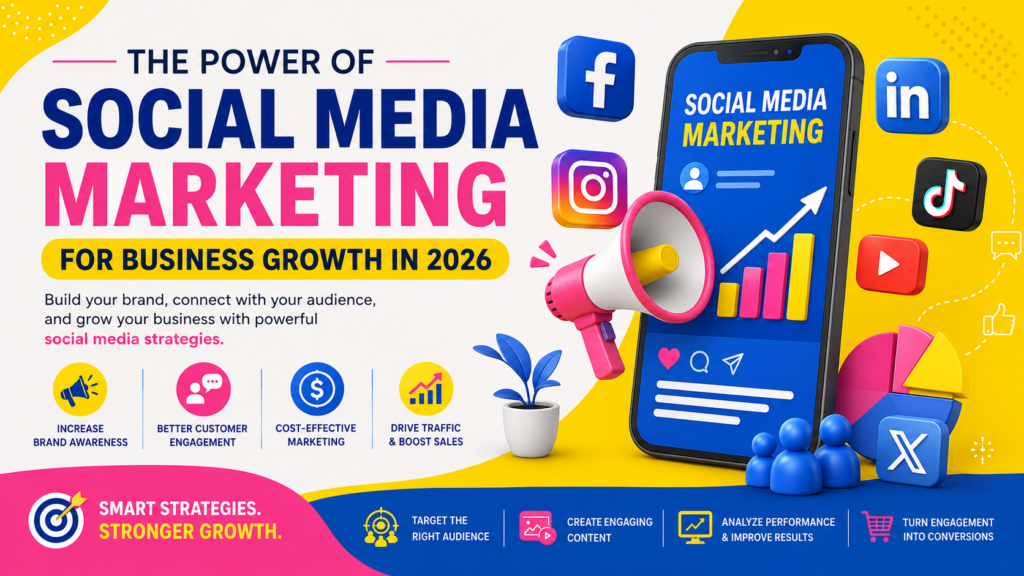
In today’s digital world, social media has become one of the most powerful tools for businesses to connect with customers, build brand awareness, and drive sales. With billions of active users across platforms like Facebook, Instagram, LinkedIn, X (Twitter), and TikTok, businesses of all sizes can reach their target audience more effectively than ever before.
What is Social Media Marketing?
Social Media Marketing (SMM) is the process of promoting products, services, or brands through social media platforms. It involves creating and sharing content, engaging with followers, running paid advertisements, and analyzing performance to achieve business goals.
Unlike traditional marketing, social media marketing allows businesses to interact directly with customers, creating stronger relationships and building trust.
Benefits of Social Media Marketing
1. Increased Brand Awareness
Social media platforms help businesses reach a wider audience. Consistent posting and engagement increase visibility and make your brand recognizable among potential customers.
2. Better Customer Engagement
Businesses can communicate directly with customers through comments, messages, and posts. This interaction helps build trust and customer loyalty.
3. Cost-Effective Marketing
Compared to traditional advertising methods, social media marketing offers affordable promotional opportunities. Even small businesses can achieve significant results with a limited budget.
4. Higher Website Traffic
Sharing valuable content and promotional offers on social media can drive visitors to your website, increasing the chances of generating leads and sales.
5. Improved Search Engine Rankings
Although social media signals are not direct ranking factors, strong social engagement can increase website traffic and brand visibility, indirectly supporting SEO efforts.
Top Social Media Platforms for Businesses
Facebook remains one of the largest social media platforms, making it ideal for businesses targeting a broad audience. Features like Facebook Ads and Business Pages help generate leads and sales.
Instagram is perfect for visual marketing. Businesses can showcase products through photos, videos, stories, and reels to engage potential customers.
LinkedIn is the leading platform for B2B marketing. It helps businesses connect with professionals, decision-makers, and industry leaders.
TikTok
TikTok’s short-form video content offers businesses a unique opportunity to reach younger audiences and increase brand visibility through creative content.
YouTube
Video marketing continues to dominate digital marketing strategies. YouTube helps businesses educate, entertain, and engage audiences while building authority.
Effective Social Media Marketing Strategies
Create High-Quality Content
Content should be informative, entertaining, and relevant to your audience. Use images, videos, infographics, and blog posts to keep followers engaged.
Maintain Consistency
Regular posting keeps your audience engaged and improves visibility across social media algorithms.
Use Paid Advertising
Social media ads allow businesses to target specific demographics, interests, and behaviors, maximizing return on investment.
Engage with Followers
Respond to comments, messages, and reviews promptly. Active engagement strengthens customer relationships and builds trust.
Analyze Performance
Track metrics such as reach, engagement, clicks, and conversions to understand what works and optimize future campaigns.
Common Social Media Marketing Mistakes
- Posting inconsistent content
- Ignoring customer messages and comments
- Focusing only on selling products
- Using poor-quality visuals
- Not tracking campaign performance
- Targeting the wrong audience
Future Trends in Social Media Marketing
The future of social media marketing will be shaped by:
- Artificial Intelligence (AI)
- Short-form video content
- Influencer partnerships
- Social commerce and in-app shopping
- Personalized customer experiences
- Interactive content and live streaming
Businesses that adapt to these trends will stay ahead of the competition and continue growing their online presence.
Conclusion
Social media marketing is no longer optional for businesses looking to succeed in the digital age. It provides powerful opportunities to increase brand awareness, engage customers, drive website traffic, and boost sales. By implementing effective strategies and staying updated with industry trends, businesses can achieve long-term growth and success in 2026 and beyond.
Why Social Media Marketing is Essential for Every Business in 2026
The Evolution of Social Media Marketing
Social media has evolved significantly over the past decade. What started as a platform for connecting with friends and family has transformed into a powerful business ecosystem where brands can market products, build communities, and generate revenue. Today, businesses can leverage advanced targeting tools, artificial intelligence, and data analytics to reach the right audience at the right time.
Consumers now spend several hours daily on social media platforms, making these channels one of the most effective places to capture attention and influence purchasing decisions. Businesses that fail to establish a strong social media presence risk losing visibility and market share to competitors.
How Social Media Influences Consumer Buying Decisions
Modern consumers often research brands on social media before making a purchase. They check reviews, testimonials, user-generated content, and brand interactions to determine credibility.
Key factors influencing purchase decisions include:
- Positive customer reviews
- Influencer recommendations
- Engaging brand content
- Quick customer support responses
- Consistent online presence
- Social proof through likes, comments, and shares
A strong social media strategy helps businesses establish trust and encourages customers to take action.
The Role of Video Content in Social Media Success
Video content has become the most consumed format across social media platforms. Short-form videos, reels, and live streams generate higher engagement compared to static posts.
Benefits of video marketing include:
- Increased audience retention
- Better brand storytelling
- Higher engagement rates
- Improved conversion rates
- Greater reach through platform algorithms
Businesses should focus on creating educational videos, product demonstrations, behind-the-scenes content, customer testimonials, and live Q&A sessions.
Social Media Advertising: A Game Changer
Organic reach is valuable, but paid advertising can significantly accelerate business growth. Social media advertising allows businesses to reach highly targeted audiences based on demographics, interests, behavior, and location.
Advantages of paid social media advertising:
Precise Audience Targeting
Reach users based on age, gender, location, interests, and purchasing behavior.
Budget Flexibility
Businesses can start with a small budget and scale campaigns based on performance.
Measurable Results
Detailed analytics help marketers track impressions, clicks, conversions, and return on investment.
Faster Lead Generation
Ads can drive traffic, generate inquiries, and increase sales within a short period.
Building a Strong Brand Identity Through Social Media
Brand identity is how customers perceive your business. Social media provides an excellent opportunity to showcase your company’s values, personality, and expertise.
To strengthen your brand identity:
- Use consistent colors and visual elements
- Maintain a recognizable tone of voice
- Share valuable educational content
- Highlight customer success stories
- Showcase company culture and achievements
Consistency builds familiarity, trust, and long-term customer relationships.
The Importance of Community Building
Successful brands focus on creating communities rather than simply selling products. Community-driven marketing encourages engagement, loyalty, and word-of-mouth referrals.
Ways to build a social media community:
- Encourage conversations
- Ask questions and conduct polls
- Respond to comments promptly
- Host contests and giveaways
- Share user-generated content
- Create exclusive groups or forums
An engaged community often becomes a brand’s strongest marketing asset.
Social Commerce: The Future of Online Shopping
Social commerce allows users to discover and purchase products directly within social media platforms. Features like Instagram Shops, Facebook Marketplace, and TikTok Shopping have transformed how consumers shop online.
Benefits of social commerce:
- Seamless purchasing experience
- Reduced buying friction
- Higher conversion rates
- Improved customer convenience
- Increased impulse purchases
As social commerce continues to grow, businesses should optimize their profiles and product catalogs for in-platform sales.
Key Social Media Metrics Every Business Should Track
Measuring performance is critical for long-term success. Important metrics include:
Reach
The number of unique users who see your content.
Engagement Rate
Likes, comments, shares, and saves that indicate audience interaction.
Click-Through Rate (CTR)
The percentage of users who click on links within your posts or ads.
Conversion Rate
The percentage of users who complete a desired action, such as making a purchase or submitting a form.
Follower Growth
Measures the increase in your audience over time.
Return on Investment (ROI)
Determines whether your marketing efforts are generating profitable results.
Artificial Intelligence and the Future of Social Media Marketing
Artificial Intelligence is transforming digital marketing. AI-powered tools help businesses:
- Create content faster
- Generate captions and hashtags
- Analyze customer behavior
- Personalize user experiences
- Automate customer service through chatbots
- Predict marketing trends
Businesses that adopt AI-driven strategies can improve efficiency while delivering more personalized customer experiences.
Final Thoughts
Social media marketing is one of the most effective and affordable ways to grow a business in 2026. From increasing brand awareness and customer engagement to driving website traffic and generating sales, the opportunities are endless. Businesses that invest in consistent content creation, paid advertising, video marketing, and community building will be better positioned for long-term success.
The future belongs to brands that embrace innovation, adapt to changing consumer behaviors, and leverage social media as a strategic growth engine. By implementing the right strategies today, businesses can create stronger customer relationships, outperform competitors, and achieve sustainable growth for years to come.