
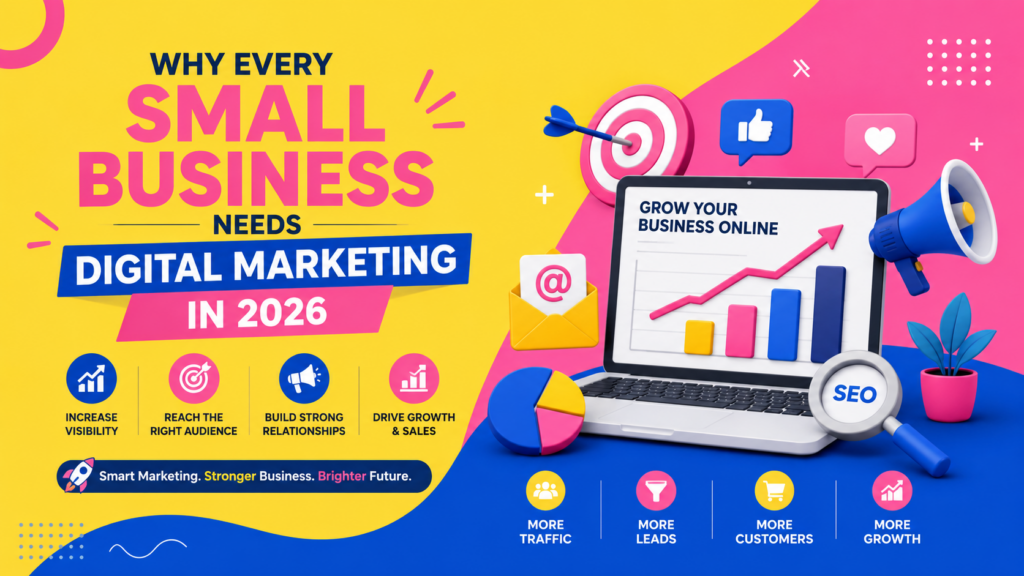
The way customers discover, evaluate, and purchase products has changed dramatically. Today, people search online before making almost any buying decision. Whether you’re a local shop, service provider, startup, or established business, digital marketing has become essential for growth. Businesses that invest in a strong online presence gain visibility, attract qualified leads, and stay ahead of competitors.
What is Digital Marketing?
Digital marketing refers to promoting products or services through online channels such as search engines, social media platforms, websites, email, and paid advertising. Unlike traditional marketing, digital marketing allows businesses to reach specific audiences, track results in real time, and optimize campaigns for better performance.
Benefits of Digital Marketing for Small Businesses
1. Increased Online Visibility
Most consumers begin their buying journey online. Search Engine Optimization (SEO), social media marketing, and content marketing help your business appear where potential customers are searching.
2. Cost-Effective Marketing
Compared to traditional advertising methods like newspapers, radio, and billboards, digital marketing offers a more affordable way to reach a larger audience while delivering measurable results.
3. Better Customer Targeting
Digital platforms allow businesses to target users based on location, interests, demographics, and online behavior. This ensures your marketing budget is spent reaching people most likely to become customers.
4. Measurable Results
One of the greatest advantages of digital marketing is the ability to track performance. Businesses can monitor website traffic, conversions, engagement, and return on investment (ROI) to improve future campaigns.
5. Stronger Customer Relationships
Social media and email marketing provide direct communication channels between businesses and customers. Regular engagement builds trust, loyalty, and long-term relationships.
Essential Digital Marketing Strategies
Search Engine Optimization (SEO)
SEO helps your website rank higher in search engine results. A well-optimized website attracts organic traffic and generates leads without ongoing advertising costs.
Social Media Marketing
Platforms like Facebook, Instagram, LinkedIn, and YouTube help businesses connect with their audience, build brand awareness, and drive engagement.
Google Ads
Google Ads allows businesses to appear at the top of search results for targeted keywords, generating immediate visibility and qualified leads.
Content Marketing
Creating valuable blog posts, videos, guides, and infographics establishes your business as an industry authority while improving SEO performance.
Email Marketing
Email campaigns help nurture leads, promote offers, and maintain customer relationships with personalized communication.
Common Mistakes Businesses Make
- Ignoring SEO and relying solely on paid ads.
- Posting inconsistently on social media.
- Failing to track marketing performance.
- Using outdated website designs.
- Not optimizing websites for mobile users.
- Creating content without understanding customer needs.
How Digital Marketing Drives Business Growth
A strategic digital marketing plan creates a consistent flow of website visitors, leads, and customers. By combining SEO, social media, paid advertising, and quality content, businesses can build brand authority, increase sales, and achieve sustainable growth.
The Future of Digital Marketing
As technology evolves, businesses must adapt to changing consumer behavior. Artificial intelligence, voice search, personalized marketing, and video content are shaping the future of online marketing. Companies that embrace these trends will gain a significant competitive advantage.
Conclusion
Digital marketing is no longer optional—it is a necessity for businesses that want to grow in today’s competitive landscape. With the right strategy, even small businesses can compete with larger brands, attract new customers, and build a strong online presence. Investing in digital marketing today creates opportunities for long-term success tomorrow.
The Role of Artificial Intelligence in Digital Marketing
Artificial Intelligence (AI) is revolutionizing the digital marketing landscape. Businesses can now automate repetitive tasks, analyze customer behavior, and create highly personalized experiences. AI-powered chatbots provide instant customer support, while predictive analytics helps businesses forecast trends and customer needs.
Marketing automation tools save time by managing email campaigns, social media scheduling, lead nurturing, and customer segmentation. As AI technology continues to evolve, businesses that adopt these tools will gain a competitive advantage and improve their marketing efficiency.
Why Website Optimization Matters
Your website is often the first impression potential customers have of your business. A slow, outdated, or difficult-to-navigate website can drive visitors away before they even learn about your products or services.
A well-optimized website should include:
- Fast loading speeds
- Mobile-friendly design
- Clear navigation
- Strong calls-to-action (CTAs)
- SEO-friendly content
- Secure HTTPS connection
When visitors have a positive experience on your website, they are more likely to become paying customers.
The Growing Importance of Video Marketing
Video content has become one of the most engaging forms of digital marketing. Consumers prefer watching videos because they are easier to consume and more visually appealing than text alone.
Businesses can use video marketing for:
- Product demonstrations
- Customer testimonials
- Behind-the-scenes content
- Educational tutorials
- Brand storytelling
- Live streaming events
Video content not only increases engagement but also improves website retention rates and social media performance.
Building Customer Trust Online
Trust is one of the most important factors influencing purchasing decisions. Customers are more likely to buy from businesses they perceive as credible and reliable.
Ways to build trust include:
- Publishing authentic customer reviews
- Showcasing case studies and success stories
- Maintaining active social media profiles
- Providing valuable educational content
- Offering transparent pricing and policies
- Responding promptly to customer inquiries
A trusted brand naturally attracts more customers and encourages repeat business.
Local SEO: A Game Changer for Small Businesses
For businesses targeting customers in specific geographic locations, Local SEO is essential. When users search for services near them, search engines prioritize local businesses with optimized profiles.
Effective Local SEO strategies include:
- Optimizing your Google Business Profile
- Adding accurate business information
- Collecting positive customer reviews
- Using location-based keywords
- Creating local-focused content
These tactics help businesses appear in local search results and attract nearby customers actively looking for their services.
Social Media Marketing Trends for 2026
Social media platforms continue to evolve rapidly. Businesses must stay updated with emerging trends to maintain engagement and visibility.
Key trends include:
Short-Form Video Content
Platforms like Instagram Reels, YouTube Shorts, and TikTok continue to dominate user attention.
User-Generated Content
Customers trust content created by other users more than traditional advertisements.
Influencer Collaborations
Partnering with influencers helps brands reach highly targeted audiences and build credibility.
Social Commerce
Consumers can now discover and purchase products directly through social media platforms, simplifying the buying process.
Measuring Marketing Success
Digital marketing provides access to detailed performance data that helps businesses make informed decisions.
Important metrics include:
- Website Traffic
- Conversion Rate
- Click-Through Rate (CTR)
- Cost Per Click (CPC)
- Customer Acquisition Cost (CAC)
- Return on Investment (ROI)
- Social Media Engagement
- Email Open Rates
Regular analysis of these metrics allows businesses to refine their strategies and maximize results.
Creating a Sustainable Digital Marketing Strategy
Long-term success requires a well-planned marketing strategy. Businesses should focus on creating a consistent online presence rather than chasing short-term results.
A sustainable strategy includes:
- Defining clear business goals.
- Identifying target audiences.
- Creating valuable content.
- Optimizing for search engines.
- Building an engaged social media community.
- Investing in paid advertising when necessary.
- Continuously analyzing and improving performance.
Businesses that follow a structured approach are more likely to achieve steady growth and long-term profitability.
Final Thoughts
The digital world offers endless opportunities for businesses willing to adapt and innovate. From SEO and content marketing to AI-powered automation and video marketing, digital strategies can help businesses reach new customers, strengthen relationships, and increase revenue.
As competition continues to grow in 2026 and beyond, companies that invest in digital marketing will be better positioned to succeed. The future belongs to businesses that embrace technology, understand their customers, and consistently deliver value through digital channels.