
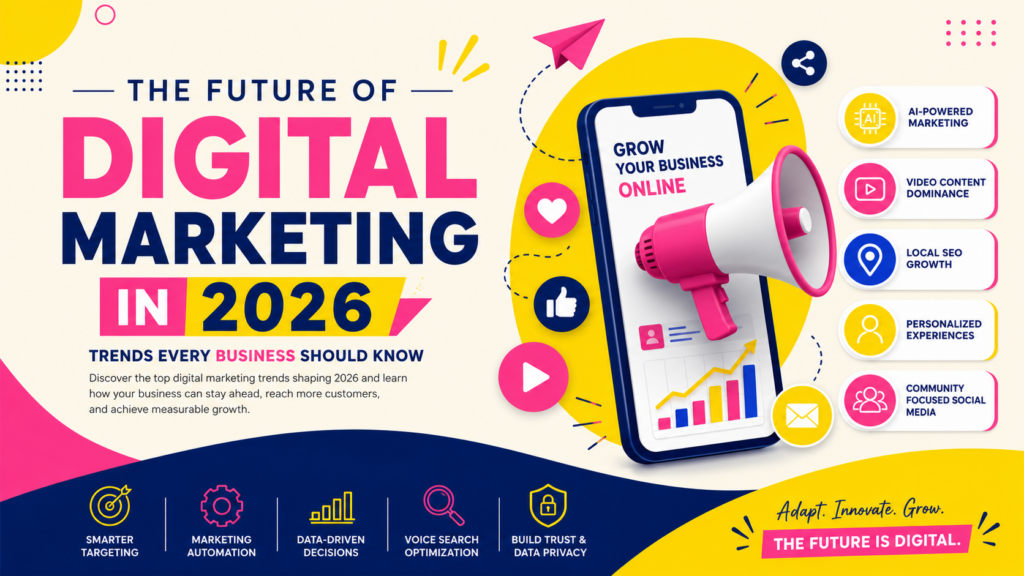
Digital marketing has transformed dramatically over the past decade, and 2026 is proving to be one of the most exciting years yet. Businesses are no longer competing solely on products and pricing—they are competing on customer experience, personalization, trust, and digital presence.
With advancements in Artificial Intelligence (AI), machine learning, voice search, automation, and data analytics, the way businesses attract and retain customers continues to evolve. Consumers are more informed than ever before, conducting extensive online research before making purchasing decisions. This means businesses must create stronger digital strategies to remain competitive.
Whether you’re a small local business, an e-commerce store, a startup, or an established enterprise, understanding the latest digital marketing trends can help you stay ahead of the competition, generate more qualified leads, and increase revenue.
Why Digital Marketing Matters More Than Ever
Today’s consumers spend a significant portion of their time online. They use search engines, social media platforms, video-sharing websites, and mobile applications to discover products and services.
Businesses that fail to maintain a strong digital presence risk losing customers to competitors who understand modern marketing strategies.
Digital marketing offers several advantages:
- Cost-effective customer acquisition
- Global reach and scalability
- Measurable performance tracking
- Better audience targeting
- Improved customer engagement
- Higher return on investment (ROI)
As technology advances, digital marketing is becoming more intelligent, data-driven, and customer-focused.
1. Artificial Intelligence (AI) Will Continue to Revolutionize Marketing
Artificial Intelligence is no longer a futuristic concept. It has become an essential tool for businesses looking to improve efficiency and customer engagement.
AI can analyze massive amounts of data in seconds, helping marketers understand customer behavior, predict trends, and optimize campaigns.
How AI Is Changing Digital Marketing
AI-Powered Content Creation
Businesses now use AI tools to:
- Generate blog ideas
- Write social media captions
- Create email marketing campaigns
- Produce product descriptions
- Generate ad copy
This allows marketing teams to create more content in less time while maintaining consistency.
Predictive Analytics
AI can predict:
- Customer purchasing behavior
- Future market trends
- Best times to launch campaigns
- Customer lifetime value
This helps businesses make smarter decisions and allocate resources effectively.
AI Chatbots and Virtual Assistants
Modern chatbots provide:
- 24/7 customer support
- Instant responses
- Lead generation assistance
- Appointment booking
- Product recommendations
Businesses using AI-powered customer service often see higher customer satisfaction rates.
2. Search Engine Optimization (SEO) Will Become More Sophisticated
SEO remains one of the most effective digital marketing strategies because people continue to use search engines to find information, products, and services.
However, search algorithms are becoming increasingly intelligent.
Important SEO Trends in 2026
User Experience (UX)
Search engines prioritize websites that offer:
- Fast loading speeds
- Mobile-friendly designs
- Secure browsing experiences
- Easy navigation
- High-quality content
A website that provides a positive user experience is more likely to rank higher.
Search Intent Optimization
Instead of focusing solely on keywords, businesses must understand why users are searching.
For example:
A user searching “best digital marketing agency” likely wants recommendations, reviews, and comparisons—not just a sales page.
Content must align with user intent to perform well in search results.
E-E-A-T Principles
Google values:
- Experience
- Expertise
- Authoritativeness
- Trustworthiness
Businesses that consistently publish reliable and valuable content build credibility and improve rankings.
3. Video Marketing Will Dominate Online Engagement
Video content continues to generate the highest engagement rates across digital platforms.
Consumers increasingly prefer watching content rather than reading lengthy text.
Types of Video Content That Work
Educational Videos
Teaching audiences how to solve problems builds trust and authority.
Product Demonstrations
Showing products in action increases buyer confidence.
Customer Testimonials
Real customer stories create credibility and social proof.
Behind-the-Scenes Content
Humanizing your brand helps build stronger customer connections.
Live Streaming
Live sessions encourage real-time interaction and audience participation.
Businesses investing in video marketing often experience:
- Higher engagement
- Better conversion rates
- Increased website traffic
- Improved brand awareness
4. Personalization Will Become a Standard Expectation
Consumers expect personalized experiences.
Generic marketing messages are becoming less effective because customers want content that feels relevant to their specific needs.
Examples of Personalization
Personalized Emails
Sending emails based on:
- Purchase history
- Browsing behavior
- Customer interests
can significantly improve open and conversion rates.
Dynamic Website Content
Websites can display customized content depending on:
- Location
- User behavior
- Previous interactions
Personalized Product Recommendations
Many e-commerce businesses increase sales by recommending products based on customer preferences.
Personalization helps create stronger customer relationships and increases customer loyalty.
5. Social Media Will Focus on Communities Instead of Followers
Brands are shifting their focus from simply gaining followers to building engaged communities.
Success on social media now depends on meaningful interactions rather than vanity metrics.
Effective Social Media Strategies
User-Generated Content
Encouraging customers to share experiences with your products creates authentic marketing.
Community Building
Creating groups and discussion spaces helps foster long-term relationships.
Influencer Collaborations
Partnering with niche influencers often generates better engagement than traditional advertising.
Interactive Content
Polls, quizzes, live sessions, and Q&A events encourage audience participation.
Businesses that focus on relationships rather than promotion often achieve stronger long-term results.
6. Voice Search Optimization Will Continue to Grow
Smart speakers and voice assistants are changing how people search online.
Users increasingly ask conversational questions such as:
- “Which digital marketing agency is near me?”
- “What are the best SEO strategies for small businesses?”
- “How can I improve my website ranking?”
Voice Search Optimization Tips
- Use conversational language
- Answer common customer questions
- Optimize for local SEO
- Create FAQ pages
- Focus on long-tail keywords
Businesses that adapt to voice search trends can capture new opportunities and improve search visibility.
7. Local SEO Will Drive More Business Growth
Local SEO remains one of the most valuable marketing strategies for businesses serving specific geographic areas.
Consumers frequently search for nearby services before making purchasing decisions.
Local SEO Best Practices
Optimize Your Google Business Profile
Include:
- Accurate contact information
- Business hours
- Photos
- Service descriptions
Encourage Customer Reviews
Positive reviews improve credibility and local rankings.
Create Location-Specific Content
Publishing content relevant to local audiences helps attract nearby customers.
Maintain Consistent Information
Ensure your business details are consistent across all online directories.
Strong local SEO can significantly increase leads, calls, and store visits.
8. Data Privacy and Consumer Trust Will Become Critical
Consumers are becoming more concerned about how businesses collect and use their data.
Transparency is essential.
How Businesses Can Build Trust
- Clearly explain data usage policies
- Obtain proper user consent
- Protect customer information
- Communicate openly
- Deliver value consistently
Trust has become a major competitive advantage in digital marketing.
9. Marketing Automation Will Improve Efficiency
Automation allows businesses to scale marketing efforts without increasing workload.
Automated Marketing Activities
- Email campaigns
- Lead nurturing
- Customer segmentation
- Social media scheduling
- Reporting and analytics
Automation helps businesses save time while improving campaign performance.
10. Content Marketing Will Remain the Foundation of Success
While technology evolves, valuable content remains at the heart of effective digital marketing.
Businesses that consistently educate, inform, and help their audiences build trust and authority.
High-Performing Content Types
- Blog posts
- Case studies
- Guides and tutorials
- Videos
- Podcasts
- Infographics
- Webinars
Quality content supports SEO, social media, email marketing, and lead generation efforts.
Conclusion
The future of digital marketing in 2026 is centered on innovation, personalization, automation, and customer experience. Businesses that embrace AI, prioritize high-quality content, optimize for search engines, leverage video marketing, and build authentic customer relationships will be best positioned for success.
Digital marketing is no longer optional—it is a fundamental component of business growth. Companies that adapt to emerging trends and focus on delivering value to their audiences will continue to thrive in an increasingly competitive digital landscape.
The future belongs to businesses that stay agile, embrace technology, and put their customers at the center of every marketing strategy.